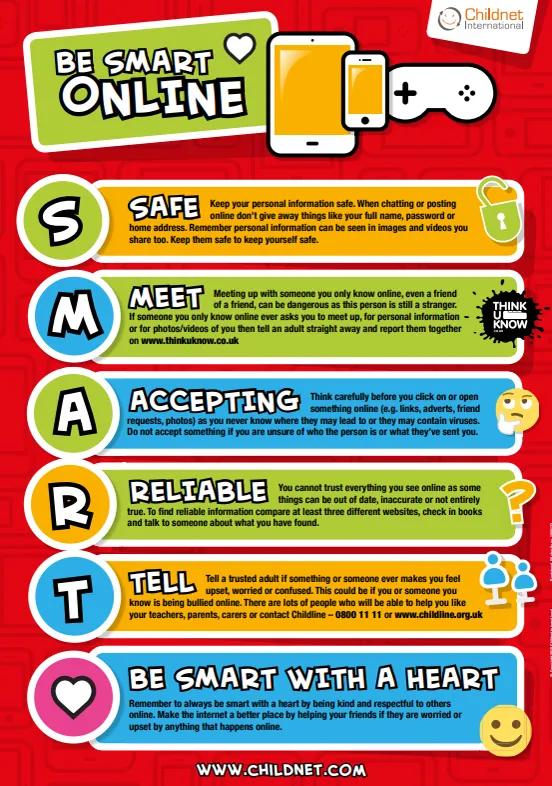
| Online Safety - Be S.M.A.R.T. Online |
|
Introduction The internet and digital technology are an important part of children’s lives from an early age. Used positively, online platforms can help children learn new skills, stay connected with family and friends, access educational resources, and enjoy a wide range of games and activities. However, just as we teach children how to stay safe in the real world, it is equally important that they learn how to stay safe online. The online world offers many opportunities, but it can also present risks and challenges that children need to understand and navigate safely. At our school, online safety is taught throughout the curriculum from Reception to Year 6 in an age-appropriate and progressive way. It is embedded across the school day and reinforced whenever children use technology in their learning. Through these lessons, pupils develop the knowledge and skills they need to use the internet and digital devices safely, responsibly, and confidently both at school and at home. Parents and carers play a vital role in supporting children’s online safety. By working together, we can help ensure that children enjoy the benefits of technology while staying safe and making positive choices online.
AI Artificial Intelligence (AI) is becoming an increasingly important part of everyday life. It can be a powerful tool that helps children learn, explore new ideas, and access information quickly. Many educational apps, search tools, and learning platforms now use AI to personalise learning and support children's progress. However, it is important to remember that AI is not always accurate and can sometimes provide incorrect, misleading, or biased information. AI can also be used to create realistic-looking images, videos, and articles that are not genuine, making it more difficult to tell what is real and what is fake. This has contributed to the growth of "fake news" online. At school, we teach children to think critically about the information they see online, to question sources, and to seek advice from trusted adults when they are unsure. By developing these skills, children can enjoy the benefits of AI while learning how to use technology safely, responsibly, and confidently.
Tips for spotting fake news online Tips for spotting fake news online - BBC Bitesize
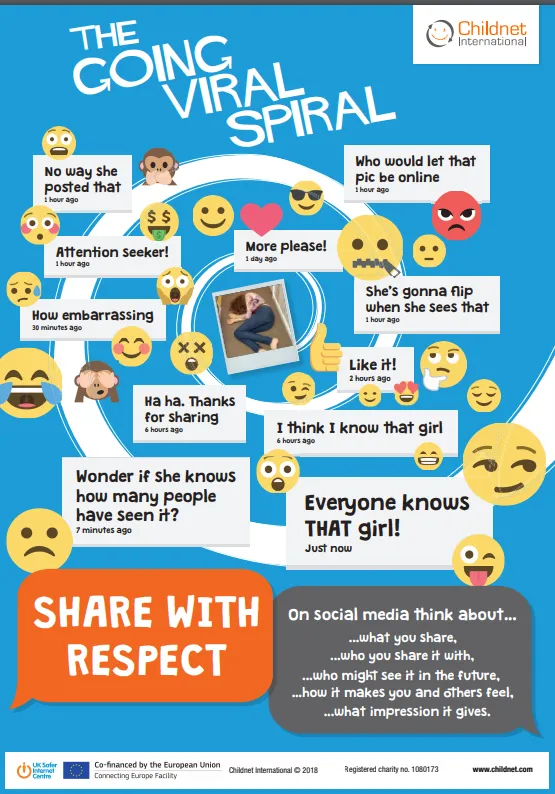
Social Media Social media can be a great way for people to communicate, share interests, and stay connected with others. However, many social media platforms are designed for older users and can expose children to content, messages, and interactions that may not be appropriate for their age. Excessive or inappropriate use of social media can affect young people's wellbeing, self-esteem, and mental health, particularly when they compare themselves to others or experience negative online interactions. It can also increase the risk of cyberbullying, exposure to misinformation, and contact from people they do not know. At our school, we help pupils develop a clear understanding of both the benefits and risks of social media through our PSHE and Computing curriculum. Children are taught how to use technology responsibly, recognise unsafe situations, manage their online relationships, and understand the impact that their online actions can have on themselves and others. By working in partnership with families, we aim to equip children with the knowledge and skills they need to make safe and positive choices online.
10 Ways to Teach Children How to Use Social Media Responsibly - Parent Guidance
|
|
|
|
If you have good reason to believe a child is at risk from abuse or exploitation either online or personally please use the above link to report it.
|
|
For further web safety information, specifically for children, the BBC has many videos and resources. To visit their page, click here.
https://www.childnet.com/young-people/4-11-year-olds/get-smart/
|
 |

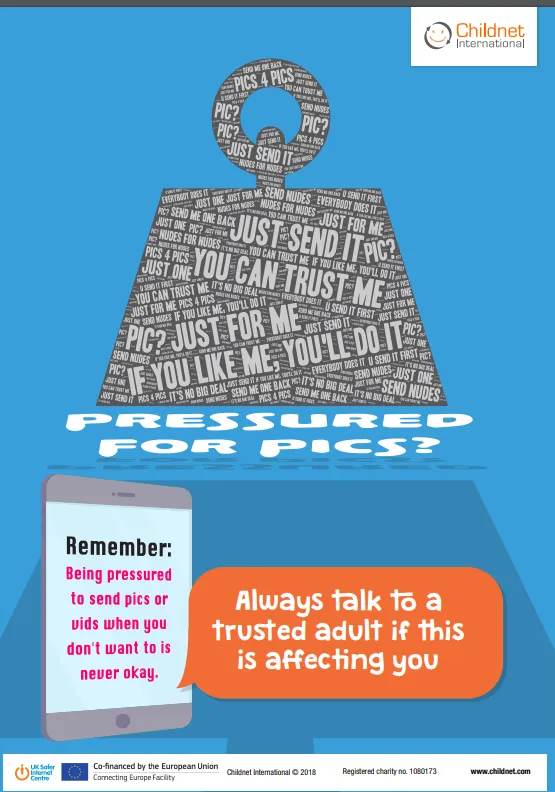


Guide to internet safety and safe surfing for young people and their parents/carers from Think U Know. Learn about online safety when using blogs, chatting, online gaming, P2P and Social Media.

#WakeUpWednesday exists to help parents and educators keep children safe online, support their wellbeing and empower them to become positive actors against climate change. Our #WakeUpWednesday initiative includes free access to guides, courses, helpful videos and tips on hot topics such as online risks, how to encourage positive wellbeing and practical steps to support sustainability.