History
History at Shiney Row Primary School
History Curriculum
At Shiney Row Primary School, we offer a high-quality history education that helps children gain a coherent knowledge and understanding of Britain’s past and that of the wider world. We have a clear focus on our own locality to ensure our rich history and heritage is at the forefront of everything we do. It inspires children’ curiosity to know more about the past, as well as equipping them with the skills to ask perceptive questions, think critically, weigh evidence, sift arguments, and develop perspective and judgement. We help children to understand the complexity of people’s lives, the process of change, the diversity of societies and relationships between different groups, as well as their own identity and the challenges of their time. This prepares them well for the next stages in the education.
During a pupil’s journey, our history curriculum builds on the knowledge and understanding of the world that children develop throughout the Early Years Foundation Stage. We have carefully designed and sequenced our history curriculum to clearly set out the vocabulary, knowledge and skills pupils gain at each stage of their learning, ensuring strong progression and a secure understanding of chronology.
In our history curriculum, progression is broken down into the following key areas:
- Topic knowledge – investigating key figures or events from historical periods; examining how aspects of life have developed over time.
- Chronological awareness – understanding how historical periods interconnect, overlap and impact each other.
- Substantive (abstract) concepts – recurring themes, key concepts and fundamental elements of historical knowledge, such as ’religion’, ‘society’ ‘trade’ and ‘achievements’.
- Disciplinary concepts – learning how historians investigate the past and how they construct historical claims.
- Historical enquiry – experiencing the process that historians use; navigating historical concepts by questioning, investigating, interpreting, evaluating, concluding and communicating.
Our aim is to provide a broad and balanced History curriculum that develops pupils’ understanding of Britain’s past, including local history, alongside that of the wider world. Through engaging and meaningful learning experiences, pupils develop secure historical knowledge, skills and vocabulary, as well as curiosity and a love for history.
Below are some photographs that showcase the children’s History learning journey throughout the year. Through a range of engaging lessons, discussions, investigations, and hands-on activities, the children have developed their historical knowledge, skills, and understanding of the past. These photographs capture key moments from their learning and celebrate the progress they have made over the year.
Year 1
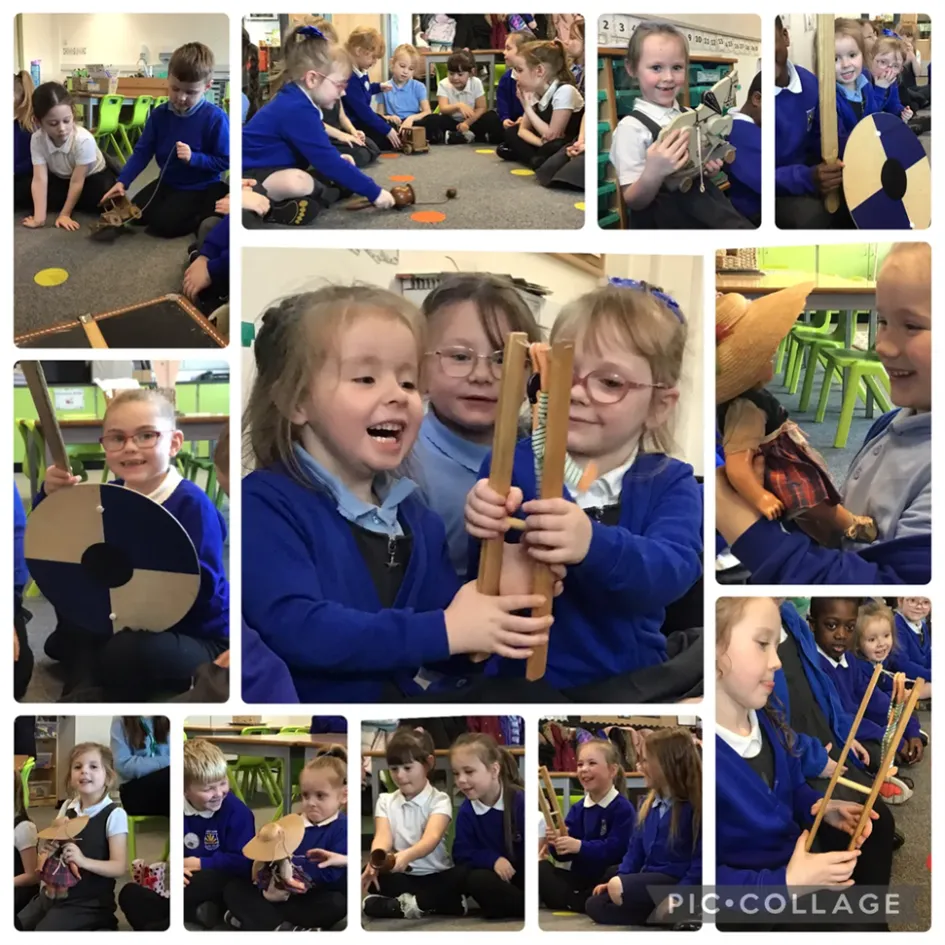
Year 1 have been learning all about how toys have changed over time — from what they’re made of to how children played with them in the past compared to today.
The children really enjoyed exploring a collection of old toys, including traditional dolls, vintage cars and some lovely old-fashioned games. It was amazing to compare these with the toys we play with now and talk about which ones are still popular today!
 |
Year 2
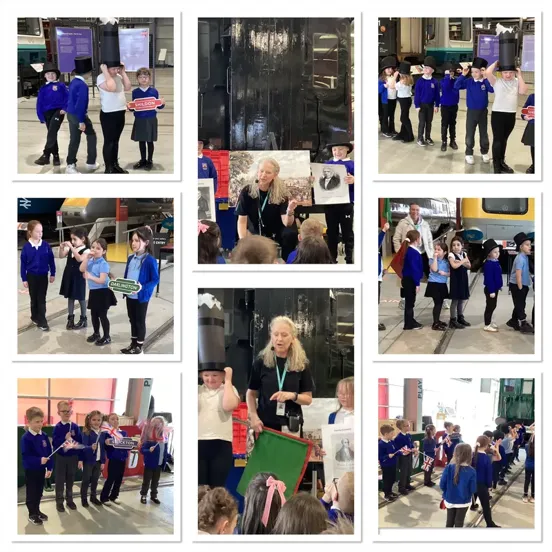
As part of their History unit on Transportation, Year 2 had a wonderful day out at the Locomotion Museum in Shildon!
They were able to see inside a real steam train and learn all about how it works. The children then explored different types of trains and discovered what they were used for in the past.
During their visit, they also learned about George Stephenson and the huge impact he had on the railways we still use today.
Year 3
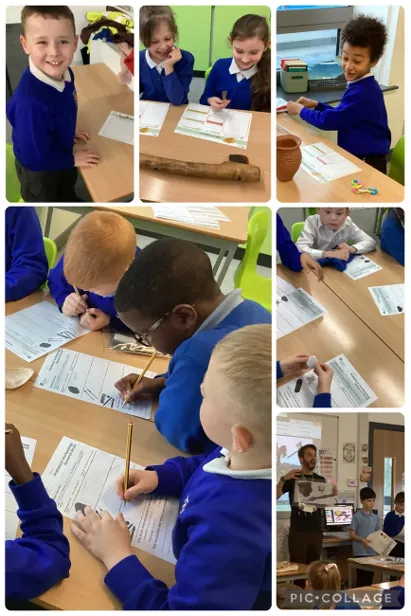
Year 3 were all experts and able to investigate real artefacts from the Stone Age, Bronze and Iron Age. They handled them carefully and came up with some wonderful ideas. They then learning how to apply their new archaeological knowledge to work out what time period some bones were from and how clues within them could tell us about the person.
Year 4
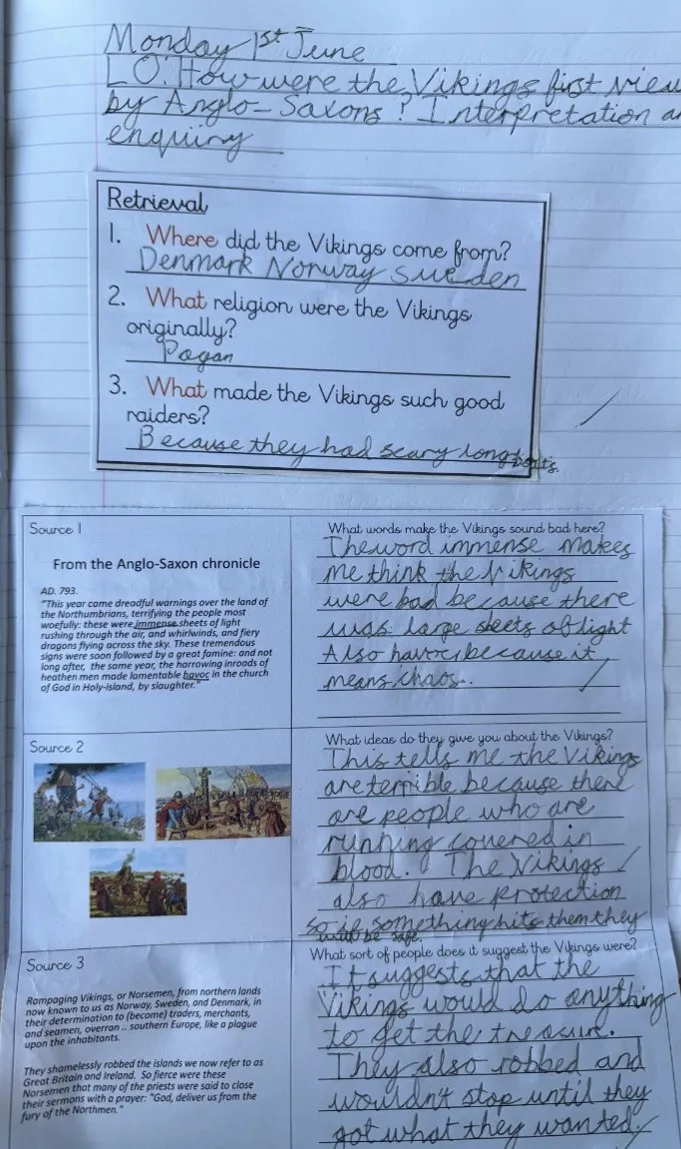
Year 4 have been exploring a range of historical sources as part of their summer topic on the Anglo-Saxons and Vikings. They have been learning how historians use evidence from artefacts, documents, and archaeological discoveries to find out about life in the past and understand these fascinating periods of history.
Year 5
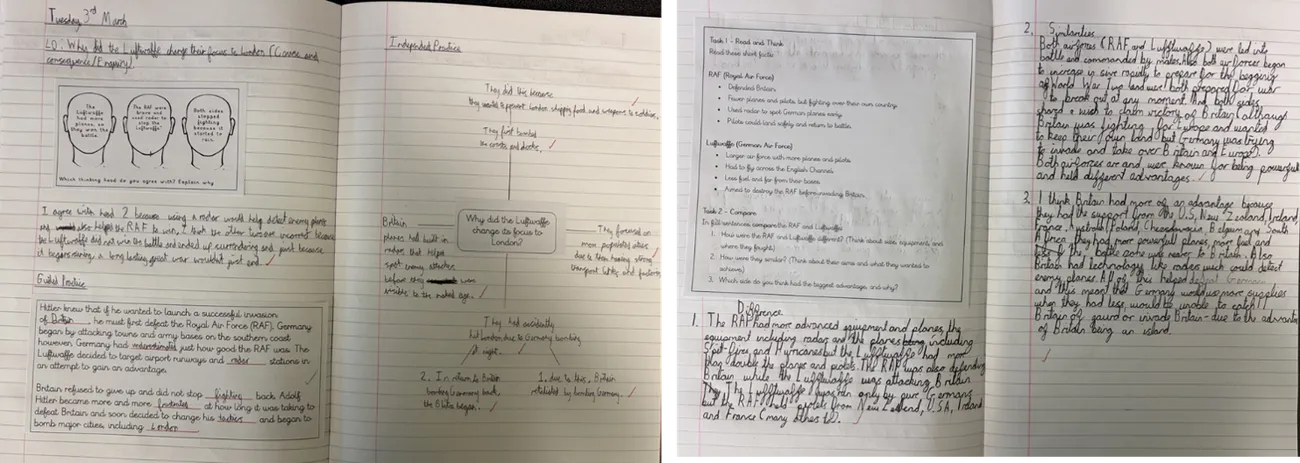
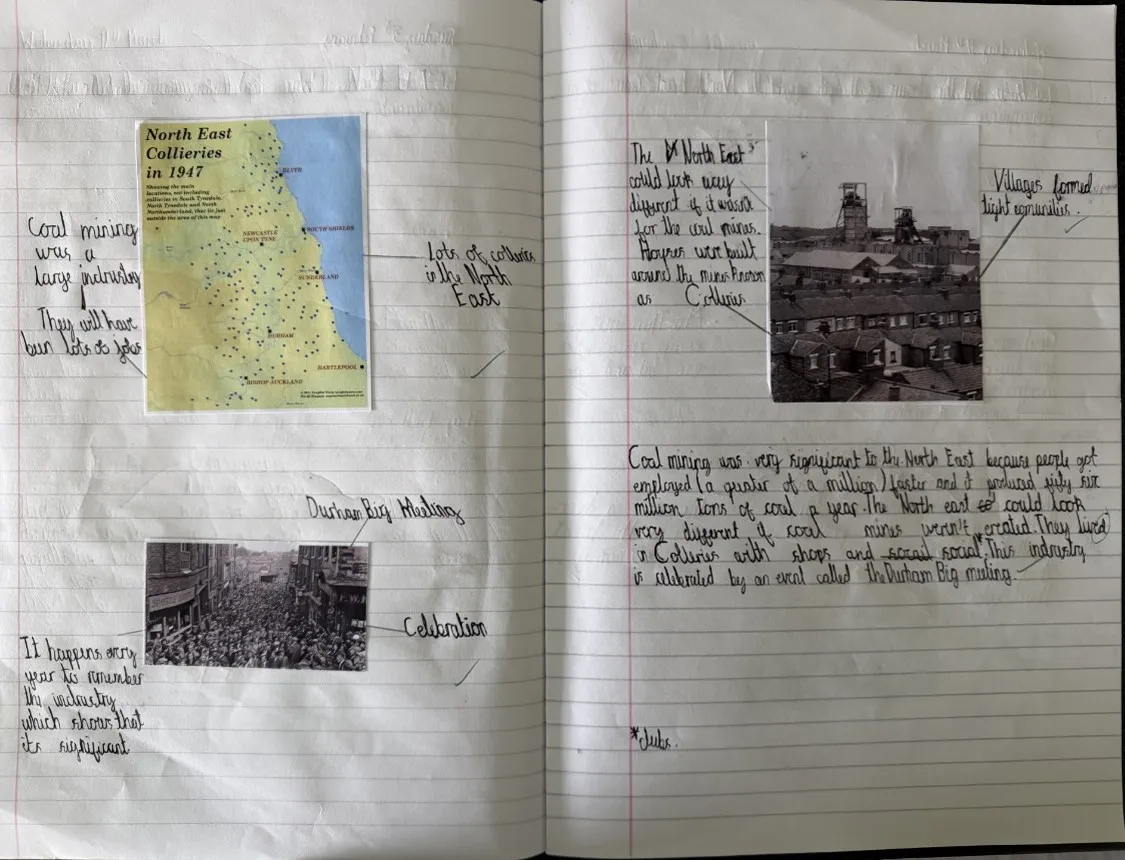
In Year 5 the children explored different historical sources, including photographs and maps, to learn about coal mining in the North East. They used evidence from these sources to find out what life was like for miners and their families and to understand why coal mining was such an important industry in the region.
Year 6
Year 6 have been investigating the causes and consequences of the Luftwaffe changing its focus from RAF airfields to London during the Battle of Britain. They analysed historical evidence, compared the strengths and weaknesses of the RAF and Luftwaffe, and explained how Britain's radar system, geography and determination helped the RAF defend the country. The children used their historical knowledge to justify their opinions and draw conclusions about which side held the greatest advantage and why.